
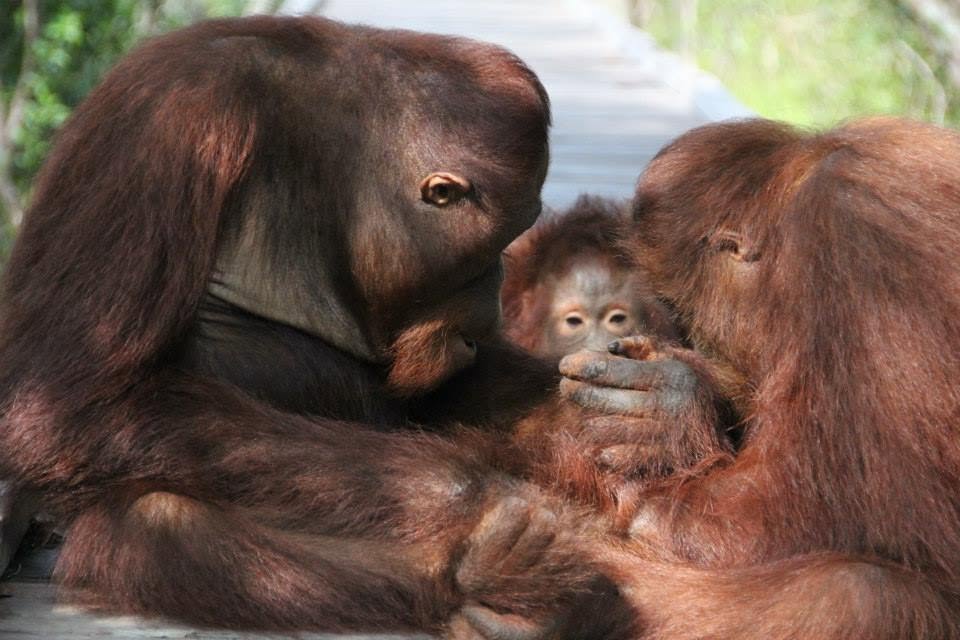
Five baby orangutans discovered thousands of kilometres from their natural habitat have raised international concerns about wildlife trafficking—and reminded us why protecting orangutans in Borneo and Sumatra matters.
The discovery was made in a forested area of Balasore, near the border with West Bengal. The presence of orangutans in India immediately attracted attention because orangutans are not native to the country and naturally occur only on the islands of Sumatra and Borneo.
The five young orangutans are believed to be approximately one to one and a half years old. Following their discovery, they were taken to Nandankanan Zoological Park in Bhubaneswar, where they are being cared for and placed under quarantine.
Initial observations by Indonesian authorities suggest that the orangutans may be Sumatran orangutans, based on their physical and morphological characteristics. However, their species and origin have not yet been confirmed, and DNA testing is expected to provide further evidence.
The circumstances surrounding the discovery have raised serious concerns. The five infants were found without their mothers, and no adult orangutans were reported in the area. Because young orangutans normally remain highly dependent on their mothers during their early years, the circumstances have prompted authorities to investigate the possibility of illegal wildlife trafficking.
Indonesia is coordinating with Indian authorities and other relevant organizations to determine where the orangutans came from and how they arrived in India. Indonesian authorities have also expressed an interest in bringing the animals back to Indonesia, subject to the appropriate legal and international procedures.
The case highlights the international nature of the illegal wildlife trade. Orangutans are protected species and are threatened by habitat loss, hunting and illegal trafficking. Removing young orangutans from the wild can also have devastating consequences because it often involves separating them from their mothers.
Authorities are continuing to investigate the case, including the possible route through which the animals were transported and whether the discovery is connected to a larger wildlife trafficking network.
For conservationists, the five young orangutans are more than a remarkable discovery. Their presence thousands of kilometres from their natural habitat is a reminder of the urgent need to strengthen wildlife protection, international cooperation and efforts to keep orangutans safe in the forests where they naturally belong.