
Culinary Heritage of Kalimantan
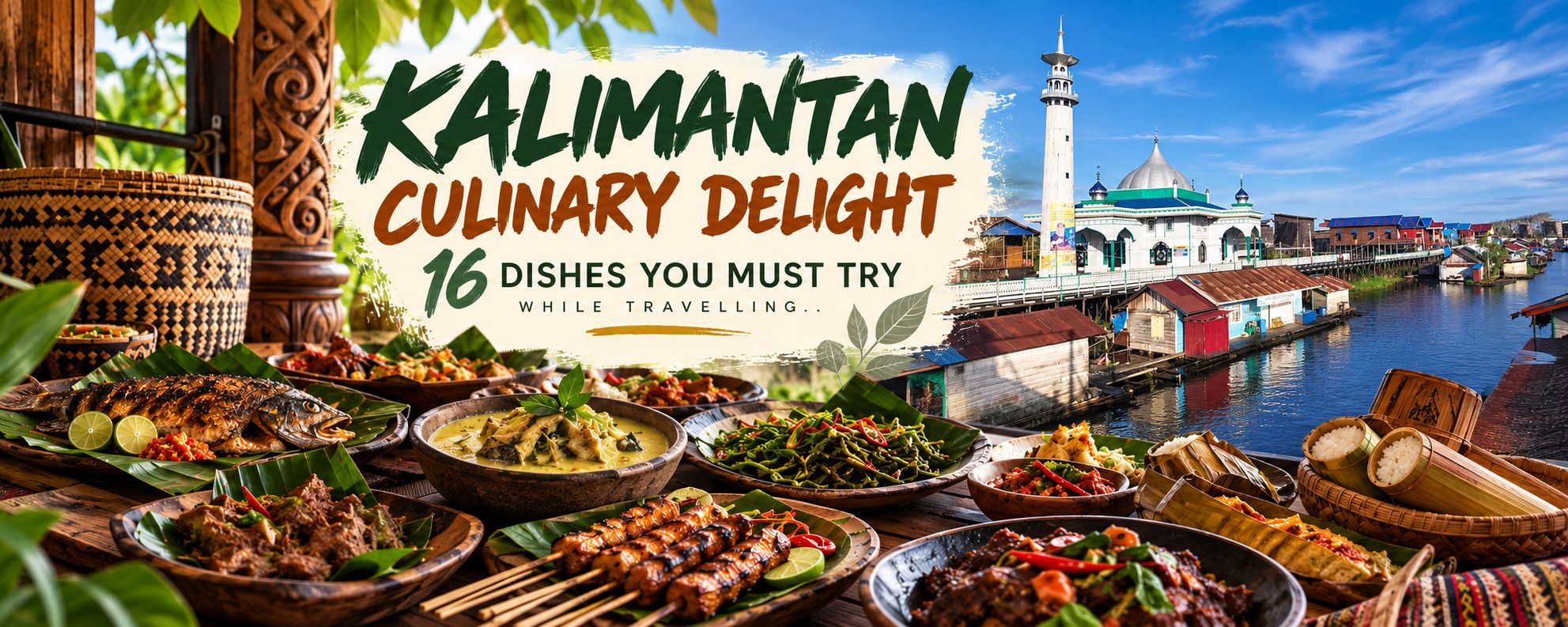
Together, these dishes showcase the rich and diverse culinary heritage of Kalimantan, drawing on local ingredients, traditional cooking techniques, and the cultural influences of the many communities that call the island home. From forest and river ingredients to traditional snacks and flavorful regional dishes, Kalimantan offers travelers a fascinating culinary journey through Borneo.

A distinctive dish that combines manday, a traditional Kalimantan specialty made from fermented cempedak skin seasoned with salt and spices, with Seruit sambal, a spicy and savory chili condiment traditionally associated with Lampung.
The chicken is enhanced with oyster sauce to create a rich and savory flavor. This dish represents a unique culinary fusion between Kalimantan and Sumatra, offering a flavorful taste of Indonesia’s diverse regional cuisine.

Soto Banjar is a traditional specialty of South Kalimantan, known for its rich and aromatic flavor. This comforting chicken soup is prepared with a flavorful chicken broth and fragrant spices such as cinnamon, cloves, and nutmeg, giving it a distinctive aroma.
It is commonly served with steamed rice or rice vermicelli, tender chicken pieces, boiled eggs, fried shallots, and celery. Lontong or ketupat may also be served as an accompaniment, adding different textures to this beloved traditional dish.

Ketupat Kandangan is a traditional dish from South Kalimantan. While it resembles other ketupat dishes, it is distinguished by its unique seasoning and presentation.
The ketupat is typically served with a rich, aromatic coconut-milk sauce, often accompanied by chicken or beef. Spices such as turmeric, lemongrass, and shallots create its distinctive aroma and flavor. It is often enjoyed during celebrations or as a special meal that reflects the rich culinary heritage of Kalimantan.

Ayam Cincane is a traditional specialty of East Kalimantan, prepared with free-range chicken seasoned with aromatic spices such as lemongrass, turmeric, ginger, shallots, garlic, and candlenuts.
The chicken is grilled until perfectly cooked and served with a distinctive red spice sauce, creating a savory and mildly spicy flavor. Ayam Cincane is often served during traditional ceremonies and special celebrations, making it an excellent introduction to the authentic flavors of East Kalimantan.

Chai Kue, also known as Choi Pan, is a traditional specialty of West Kalimantan made from a thin, translucent rice-flour wrapper filled with seasoned vegetables such as jicama, carrots, and garlic chives.
The dumplings are steamed until tender and commonly served with fried shallots and chili sauce. Light and refreshing, with a pleasantly chewy texture, Chai Kue offers a taste of the Chinese culinary heritage that has become part of Kalimantan’s diverse food culture.

Juhu Singkah Uhut is a traditional Dayak soup from Kalimantan, known for its distinctive combination of rattan shoots and locally caught river fish, such as catfish.
The slightly bitter flavor of young rattan shoots blends with the savory taste of fish and spices including shallots, garlic, turmeric, and ginger. This traditional dish offers visitors a unique opportunity to discover indigenous ingredients and culinary traditions from the forests and rivers of Borneo.

Wadi is a traditional specialty of South Kalimantan made from fish preserved through a fermentation process using salt and roasted, ground glutinous rice.
After fermentation, the fish is fried or cooked before being served. Wadi has a distinctive sour and savory flavor created by the fermentation process. This traditional dish provides a fascinating glimpse into the culinary heritage and food-preservation traditions of Kalimantan.

Nasi Subut is a traditional dish from North Kalimantan made with sweet corn and purple sweet potato, giving the rice its distinctive purple color, mildly sweet flavor, and soft texture.
The sweet potato is diced and combined with the rice and corn, creating a nourishing and colorful dish. It is traditionally served with stingray satay, offering a distinctive combination that has been enjoyed by local communities for generations.

Pisang Gapit is a traditional snack from East Kalimantan, particularly popular in Samarinda. The name gapit means “clamp” in the local language, referring to the traditional method of grilling bananas between two grilling tools.
Usually made with ripe kepok bananas, the fruit is grilled until fragrant and lightly caramelized, giving it a soft yet pleasantly chewy texture. It is served with a rich sauce made from palm sugar, coconut milk, and a little salt, sometimes enhanced with pandan leaves.

Gangan Asam Banjar is a traditional fish soup from Banjarmasin, South Kalimantan, known for its distinctive fresh and tangy flavor.
It can be prepared with fish such as patin, snakehead, or haruan, cooked with a blend of shallots, garlic, turmeric, ginger, and galangal. Lemongrass and bay leaves add fragrance, while vegetables such as chayote and long beans provide texture. Some variations include pineapple for a touch of natural sweetness.
Served hot with steamed rice, Gangan Asam Banjar makes a refreshing and flavorful traditional meal.

Bubur Pedas Sambas is a traditional dish from West Kalimantan, particularly associated with the Sambas region.
Unlike ordinary rice porridge, it is richly seasoned with spices such as turmeric, lemongrass, ginger, and chili, along with a variety of vegetables including carrots, long beans, and spring onions. Meat such as beef or chicken may also be added, while some variations include shrimp or fish.
The result is a hearty and flavorful porridge that reflects the diverse culinary traditions of West Kalimantan.

Ayam Masak Habang is a traditional specialty of South Kalimantan distinguished by its characteristic red-colored sauce. In the Banjar language, habang means “red.”
The rich red sauce is made primarily from dried chilies and is combined with shallots, garlic, ginger, galangal, cinnamon, cloves, and cardamom. The result is a richly spiced chicken dish with a deep aroma and distinctive flavor.

Mie Tiaw, also known as Kwetiau, is a popular specialty of Pontianak, West Kalimantan, influenced by the Chinese community and heritage of the city.
It is commonly served in two versions: fried kwetiau and stirred or gravy-style kwetiau. Depending on the preparation, it may include beef, seafood, meatballs, or offal. Its savory flavor and soft, broad rice noodles make Mie Tiaw a distinctive part of Pontianak’s culinary identity.

Bubur Gunting is a popular sweet street food found in Pontianak, particularly associated with Singkawang.
This traditional sweet porridge is made from peeled mung beans and served with pieces of cakwe, a fried dough snack cut into small pieces. It can be enjoyed either warm or chilled, making it a simple but distinctive traditional dessert.

Gandasturi is a traditional Indonesian fritter made from mashed mung beans mixed with sugar, coated in a flour batter, and deep-fried until golden.
It is commonly sold alongside fried bananas and is often enjoyed as a breakfast snack or as an accompaniment to afternoon coffee.

Rujak Ebi is a distinctive fruit salad made with ground dried shrimp (ebi) as one of its signature ingredients.
The shrimp is usually roasted before being ground to release its aroma. A variety of fruits and vegetables, such as jicama, pineapple, guava, mango, and cucumber, are mixed with traditional rujak seasoning. Crushed peanuts are combined separately with tamarind, palm sugar, and shrimp paste, creating a unique balance of sweet, sour, savory, and spicy flavors.